
GRIEF AND PARASOCIAL RELATIONSHIPS Or When Crying on the Internet is Therapeutic by Carson McCain, LPC
In the dark times of 2020 I made the conscious decision to cull my social media. The list of acceptable content was short:
1 – People I knew personally
2 – The Try Guys and Smosh content (I’m a millennial OKAY?!)
3 – Dogs
This is all well and good until I realize that I am telling my husband about Tiki the rescue dog, and he asks when we can all meet up – because I have not explained that this is a dog I do not know but have followed on the internet for months and feel personally invested in.
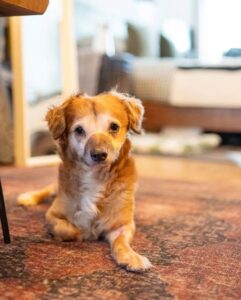
I have to start with Tiki because he is how I found Isabel Klee. Tiki was an extremely fearful and shutdown dog fostered by Isabel. Isabel had been online for a long time, showing her various fosters and their recovery, but Tiki was described as a potential lost cause. Isabel was very frank with her audience that she was unsure what she could do or if anything would help. In tiny tiny movements toward connection, Tiki began to trust. Through his time in foster care, Tiki became a dog with lots of scars, but with lots of hope.
Following Tiki’s journey to recovery felt parallel to what I’ve watched many of my Complex Trauma clients go through. It’s slow, it’s not linear, weird things are triggering (like when someone stands up too fast). But one secure attachment, one safe relationship can make space for hope and trust. Therapists can be this for their clients. Isabel is that for her foster dogs. And it’s ok if that healing takes longer than you think it should. If you were my client during that time, this may be a familiar metaphor to you. I might have literally told you to ‘Be Brave like Tiki.’
So it was through Tiki that I got to know Isabel. And through Isabel, we – her followers – got to know Simon as well.
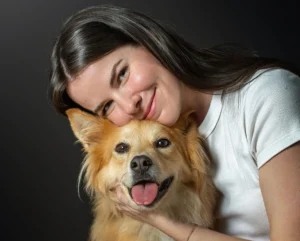
Let me give you a brief summary of Simon’s internet presence. Simon was described in Isabel’s writing as her soul dog. He was the foster brother to many who came through their New York apartment. He was medically complex his entire life, but was diagnosed with terminal cancer in the summer of 2026. The last two months, Isabel has walked us through her last weeks with Simon before making the decision to let him go. And suddenly my carefully curated feed of joy has become a space of collective grief.
We as her followers watched as she grieved the initial diagnosis. We watched her grieve the prognosis when it was given and then again when he could not enjoy his life the way she wanted him to. We watched her give him the gift of a last hike, a last party, and the gift of not making him choose to leave her in the end.
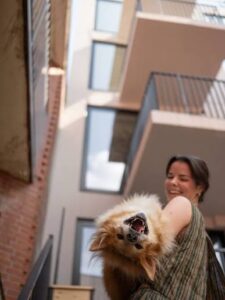
I spend a lot of time thinking about loss. It is one of the hazards of being a grief therapist. My social media feed is filled with grief-y content; words of advice and comfort, rituals for mourning, art that’s made up of people processing their great pains. I am no stranger to a post making me cry. It’s not often I find myself surrounded by people who feel the same way.
There’s this thing, disenfranchised grief. Put simply, it’s any grief without a social script. It might be grief around someone you lost, but they didn’t die. It might be grief around someone who chose their own death. Or it might be grief that society minimizes. Pet loss is a form of disenfranchised grief. And parasocial pet loss? Even more so.
But this dog, Simon, has given us permission to be sad. To be vocally sad. To allow the parasocial to be more present in our daily lives. Suddenly non-influencers feel compelled to share their sadness in the hope that Isabel might see how big Simon’s presence was to all of us. That she might feel less alone. And in that practice of sharing our sad, we too are less alone.
I think the reason so many people are affected by Simon’s death is that they see themselves in Isabel. Even if our lives look very different than hers. She is legitimizing all of our disenfranchised grief by taking up space. By saying, my sadness is loud and this loss is gaping, all of us can be validated that our own losses could be just as big. When people are crying on the internet for Simon, for Isabel, for Mister Isabel, they are acknowledging and crying for their own Simons. Their own pets. Their own gaping wounds.
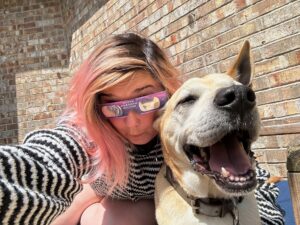
I lost my dog suddenly and unexpectedly in December last year. Yes, I cried. I missed her. Our routine. But I was surprised by how viscerally my body missed her body. I miss the weight she used to plop down onto me when we settled in for the night. I miss the leaning into me she’d do as we sat on the couch. I miss her punchy paws. I miss kissing her floppy lips. I miss her particular frito-feet smell. And I felt and still feel like that grief is at once too much and not enough. I am not enough in the griever’s club to be grieving. I am too sad, too affected, too preoccupied with ‘just a dog.’
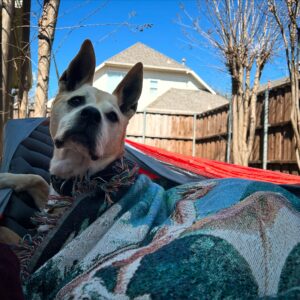
The collective grief for Simon makes me feel so much less alone. Because if Isabel can throw a celebration of life for her animal, I don’t have to feel badly about not being able to put away Mae’s bowl. If Isabel can mourn publicly and truthfully, I can mourn with those who I feel safe to see me. If a rescue can name their new hospital after Simon, maybe it’s ok if I bring up my dog that died in casual conversation.
If people can cry on the internet about a dog they never met, I don’t have to feel guilty for crying in the brewery while writing this 8 months later.
Because Simon matters to so many people, maybe it’s ok that Mae matters this much to me.
We enfranchise our grief with connection. We ‘make meaning’ by joining together with those who might understand. Parasocial relationships are still relationships and through them I hope we all feel less alone.
You can find Isabel online @simonsits, and you can read her book Dogs, Boys and Other Things I’ve Cried About if you’d like more connection with this particular corner of the internet. Photo credit includes Isabel Klee of @simonsits, Jen Hillenga of @thewaysofthedog, Alexandra Lloyd of @adoptabledogsofnyc, and me and my iPhone 14.